We Manufacture. We Install. We Guarantee.
Factory Direct Glass Blocks in Pittsburgh.
Veteran-Owned. Serving PA Since 1994.
Quality Glass Blocks. 20-Year Warranty.
Your Local Glass Block Experts.
Privacy Without Sacrificing Natural Light.
Timeless Style for Your Home.
The Ultimate Basement & Bathroom Upgrade.
Privacy Without Sacrificing Natural Light.
We Manufacture. We Install. We Guarantee.
Factory Direct Glass Blocks in Pittsburgh.
Veteran-Owned. Serving PA Since 1994.
Quality Glass Blocks. 20-Year Warranty.
Your Local Glass Block Experts.
Privacy Without Sacrificing Natural Light.
Timeless Style for Your Home.
The Ultimate Basement & Bathroom Upgrade.
Privacy Without Sacrificing Natural Light.
We Manufacture. We Install. We Guarantee.
Factory Direct Glass Blocks in Pittsburgh.
Veteran-Owned. Serving PA Since 1994.
Quality Glass Blocks. 20-Year Warranty.
Your Local Glass Block Experts.
Privacy Without Sacrificing Natural Light.
Timeless Style for Your Home.
The Ultimate Basement & Bathroom Upgrade.
Privacy Without Sacrificing Natural Light.
We Manufacture. We Install. We Guarantee.
Factory Direct Glass Blocks in Pittsburgh.
Veteran-Owned. Serving PA Since 1994.
Quality Glass Blocks. 20-Year Warranty.
Your Local Glass Block Experts.
Privacy Without Sacrificing Natural Light.
Timeless Style for Your Home.
The Ultimate Basement & Bathroom Upgrade.
Privacy Without Sacrificing Natural Light.
Many property owners often wonder if glass block windows are energy efficient enough to meet the rigorous demands of today’s building codes and rising utility costs. As we shift toward more sustainable architecture, the focus on the building envelope insulation has never been higher. Glass blocks are no longer just a vintage design choice; they have evolved into high-performance, energy-saving window solutions that offer a unique blend of privacy and thermal control.
Modern construction requires materials that can maintain a stable indoor climate while maximizing natural light window solutions. In this guide, we will explore the thermal properties of glass blocks and how they contribute to a more sustainable, cost-effective living or working environment.
Are Glass Block Windows Energy Efficient Compared to Traditional Windows?
When comparing energy performance, glass blocks often outperform older single-pane or even some standard double-pane windows. The inherent structure of a glass block creates a vacuum or an argon-filled space during the manufacturing process. This hollow center acts as a powerful barrier against thermal transfer, which is why many Pittsburgh commercial glass block contractors recommend them for long-term efficiency upgrades.
Standard windows often rely on thin frames that can warp or degrade over time. In contrast, energy-efficient glass block windows are thick and substantial. This thickness provides a much higher level of glass block window insulation than a single sheet of glass. While high-end window glazing systems have improved, glass blocks remain a top contender for those seeking high-insulation window systems that do not compromise on security.
How Glass Block Windows Improve Energy Efficiency in Buildings
The primary way these windows improve efficiency is through their airtight construction. Because they are typically mortared or siliconed directly into the wall opening, they eliminate the gaps found in operable windows. This creates a draft-resistant window system environment that prevents conditioned air from escaping.
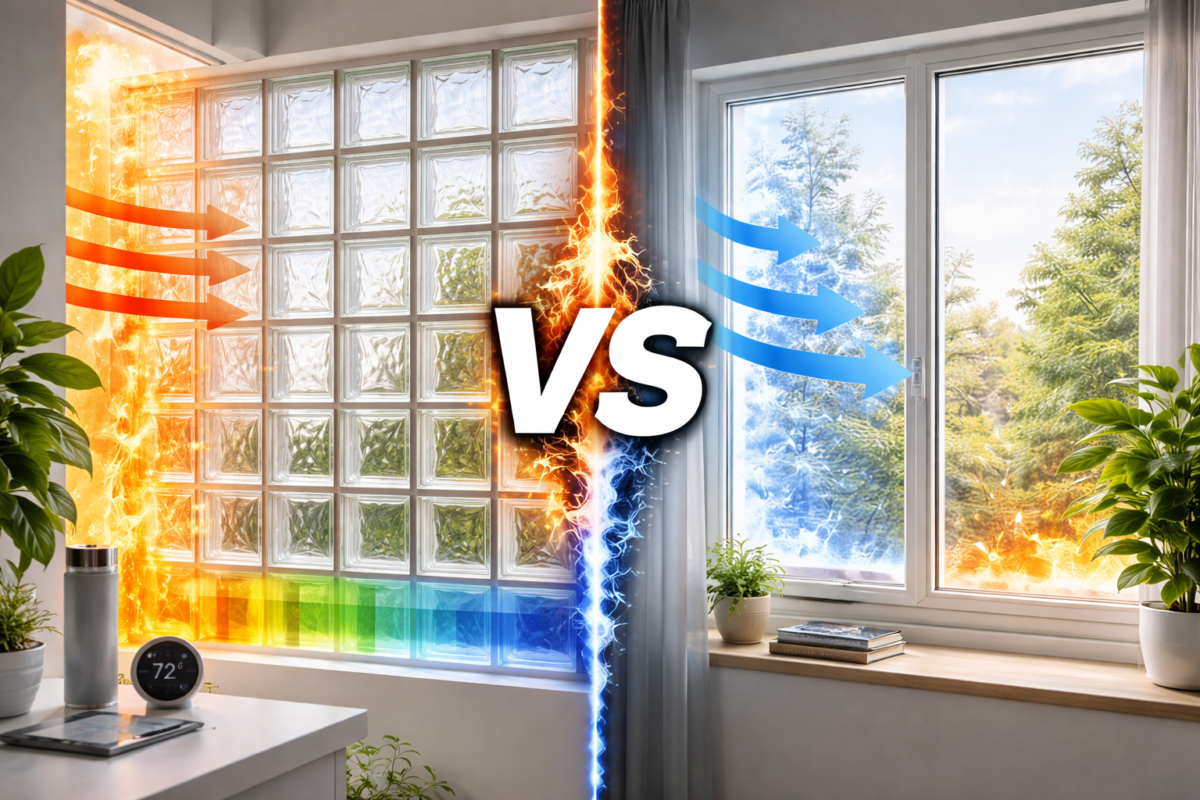
Glass Block Windows vs. Standard Windows for Insulation Performance
Insulation performance is measured by U-values and R-values. Many modern glass block windows provide thermal resistance that rivals insulated glass units. Unlike standard windows that may have aluminum frames—which conduct heat and cold—glass blocks are surrounded by masonry or specialized spacers that offer superior thermal insulation material properties.
For homeowners looking to upgrade, replacing leaky sliders with glass block basement windows can transform a cold, damp area into a dry, temperate space. The energy performance window rating of a solid glass block wall is consistently higher than that of traditional wood or vinyl-framed windows that have begun to fail.
How Glass Block Windows Help Reduce Heat Loss and Air Leaks
One of the biggest culprits of high energy bills is air infiltration. Traditional windows have moving parts, weatherstripping, and seals that eventually leak. Glass block window installation creates a permanent, airtight seal within the building envelope.
This setup ensures a massive window heat loss reduction because there are no cracks for wind to whistle through. Even when incorporating glass block vent windows for necessary airflow, the surrounding blocks remain fixed and solid. These weather-resistant glass block windows stand up to extreme pressure and temperature fluctuations, making them ideal for secure basement window replacement solutions in challenging environments.
Benefits of Glass Block Windows for Modern Homes and Commercial Spaces
The benefits extend beyond just the monthly bill. In modern residential design, using a glass block shower half wall can help retain steam and heat within a bathroom, improving the local thermal comfort.
For commercial spaces, thermally efficient window systems made of glass block provide the following:
Enhanced security against break-ins.
Superior soundproofing in busy urban areas.
Diffusion of sunlight to reduce glare on computer screens.
Compliance with modern energy performance standards.
Where Energy-Efficient Glass Block Windows Are Commonly Installed
These windows are versatile and serve various functional needs across a property. Most commonly, they are utilized as glass block basement windows in Pittsburgh to provide security and insulation in below-grade spaces.
They are also incredibly popular as glass block bathroom windows in Pittsburgh because they provide total privacy while allowing soft, natural light to filter in. In commercial settings, architects use them in stairwells, entryways, and partitions to maintain modern window efficiency solutions throughout large floor plans.
Installation Factors That Affect Glass Block Window Efficiency
While the blocks themselves are efficient, the quality of the insulated glass block window system depends on the installation. Using high-quality mortar or specialized silicone is essential to maintain the window insulation improvements you expect, especially when considering modern ideas for upgrading your shower area that combine both function and style.
Poorly installed blocks can leave small gaps that allow moisture and air to penetrate. It is vital to ensure that the building envelope insulation remains continuous. Property owners exploring ideas to enhance your home’s design with unique features should also prioritize proper installation, as professional installers often use window ventilation panels specifically designed to fit within the block grid while maintaining a tight seal.
Why Glass Block Windows Are Used in Energy-Efficient Building Designs
Architects favor these units because they contribute to a “passive” energy strategy. By acting as durable insulated window systems, they help regulate the building’s internal temperature naturally.
The heavy glass mass can even provide a small amount of thermal storage, absorbing heat during the day and releasing it slowly. When integrated with other building insulation systems, glass blocks help projects meet LEED certification and other green building goals. For those looking to upgrade your home for improved energy savings, they remain a staple in energy-efficient building designs because they last for decades without needing the replacement parts required by mechanical windows.
FAQ
Are glass block windows energy efficient?
Yes, they are highly efficient due to their thick glass walls and the airtight seal created during installation, which prevents drafts and thermal transfer.
How do glass block windows improve insulation in buildings?
They improve insulation by creating a solid barrier with no moving parts, using the dead air space inside the blocks to resist heat flow.
Do glass block windows help reduce heat loss?
They significantly reduce heat loss by eliminating air leaks and providing a higher thermal resistance than many standard window types.
Are glass block windows suitable for modern homes?
Absolutely. They offer a sleek, clean aesthetic and help modern glass block windows meet modern energy codes.
Can glass block windows be used in commercial buildings?
Yes, they are ideal for commercial use because of their durability, low maintenance requirements, and excellent thermal performance.
How do glass block windows compare to traditional windows for insulation?
They generally offer better air-sealing and higher R-values than older or lower-quality traditional windows.
What features make glass block windows energy efficient?
Features include the hollow insulating center, the thickness of the glass, and the use of airtight mortar or silicone joints.
Where are energy-efficient glass block windows commonly installed?
They are frequently found in basements, bathrooms, and commercial entryways where privacy and insulation are priorities.
How do glass block windows allow natural light while maintaining insulation?
The transparent or patterned glass lets light pass through while the internal vacuum and thick walls block the transfer of heat and cold.
What maintenance practices help maintain the efficiency of glass block windows?
Regularly checking the mortar or silicone joints for cracks and ensuring any vent inserts are properly sealed will maintain peak efficiency.
Conclusion
Choosing the right materials for your windows is a critical decision for any property owner. Glass blocks provide a unique solution that addresses security, privacy, and thermal performance simultaneously. By reducing air leaks and providing a robust barrier against the elements, these windows help create a more comfortable and cost-effective indoor environment.
Whether you are looking for glass block basement windows in Pittsburgh or a custom architectural feature for a commercial storefront, the energy benefits are clear. Investing in these systems ensures your building remains protected and efficient for years to come. Explore our latest designs to see how you can improve your property and discover for yourself that glass block windows are energy efficient for any application.